


You Don’t Know You Need A Will – Until It’s Too Late


Estate planning often sits at the bottom of our ‘to do’ lists, overshadowed by the demands of daily life. But when the unexpected happens, the absence of a clear plan can leave loved ones navigating confusion, conflict and costly legal hurdles.
By Lindzi Caputo – Partner at HLB Mann Judd
It’s estimated that over half of adult Australians don’t have a Will in place.
A Will isn’t just a document, it’s a safeguard for your wishes, your family and your legacy.
In this article, we explore why proactive estate planning is one of the most important decisions you’ll ever make.
Importance of estate planning
Each year, many Australians pass away without a valid Will which is known as dying ‘intestate’. This leaves families to navigate complex legal processes and uncertainty during an already difficult time.
When this happens, the laws of intestacy determine how the estate assets are to be distributed amongst beneficiaries. These laws provide a hierarchy of eligible relatives to inherit the assets and can vary from state to state. Typically, the surviving spouse and then children are prioritised.
While this may suit the family needs, there are many instances where it can cause complications, such as when an ex-partner is still legally considered a spouse.
Without a valid Will in place, an administrator needs to be appointed to manage the deceased’s estate, which can be a costly and drawn-out process.
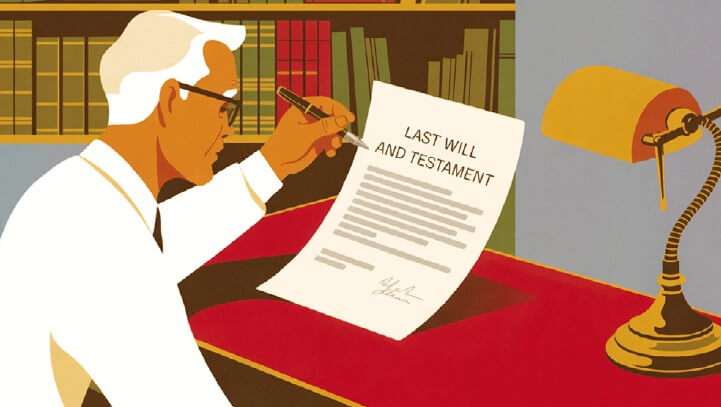
What does it mean to have a valid and current Will?
A Will specifies how you’d like your assets to be distributed when you pass away, and who you would like to act as your executor. It can also include bequests and instructions regarding the guardianship of minor children.
A Will must be in writing and appropriately witnessed by two adults to be valid.
Wills should be reviewed and updated regularly to ensure they reflect the current wishes of the will-maker. For instance, marriage or the birth of a child are life changes that may impact the currency of the Will.
While it is possible to prepare a Will using a Will kit, it can be risky because it may not meet legal requirements, lacks tailored advice and can lead to disputes or an invalid Will.
It’s a good idea to consult a solicitor who specialises in estate planning to ensure the Will is appropriate to your circumstances.
Depending on the situation, a Will can be as simple or as complex as you require. For example, blended family scenarios may require additional provisions to prevent future challenges or claims.
For those wishing to protect the family legacy, Testamentary Trusts can be used to provide asset protection and some tax benefits to beneficiaries. If a Will allows, the beneficiaries could inherit assets via a Testamentary Trust rather than directly into their own names.
Other estate planning documents
In addition to the Will, a robust estate plan should include:
- Power of Attorney — this allows a trusted person to step in and make financial or legal decisions on your behalf. It is important to seek legal advice on the right power of attorney for your circumstances as they can vary from state to state within Australia. For instance, an ‘enduring’ power of attorney can remain in effect for your lifetime, even if you later lose mental capacity, where as a ‘general’ power of attorney would become invalid upon losing mental capacity.
- Enduring Guardianship gives someone authority to make lifestyle, health and medical decisions if you lose capacity due to illness,
- injury or cognitive decline such as dementia or unconsciousness. This trusted person would be relied upon to make decisions such as where you live, what medical treatment you receive and other health and personal services if you are unable to make decisions about your own affairs.
- Advanced care directive is a legal document specifying your future health care preferences, such as end-of-life care.
- Super beneficiary nomination provides instructions to the trustee of your superannuation account on how you wish your superannuation balance to be distributed upon death. You can only nominate a superannuation dependent, which is a spouse, child or person you have an interdependency relationship with.
- Estate planning is not just for the wealthy or elderly; it’s a vital step for anyone who wants to protect their loved ones and ensure their wishes are honoured.
- By taking the time now to create a valid Will and supporting documents, you can spare your family unnecessary stress and uncertainty in the future. It’s a simple act of care that speaks volumes, long after you’re gone.
HRIA Members can access advice from HLB Mann Judd. Visit the Member Portal on the HRIA website for details.