

Peter Wenn Retires as EWPA Technical Director

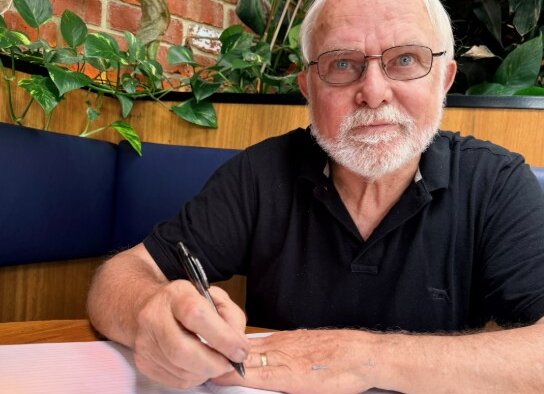
For nearly 25 years, Peter Wenn has been the Technical Director at the EWPA, quietly reshaping how elevating work platforms are designed, regulated and used across Australia.
Ask Peter Wenn to sum up his role at the EWPA and he’ll tell you it’s to take complex engineering standards, regulations and concepts and translate them into something a new operator or a busy hire branch manager can actually use.
“We act as a bridge between technical requirements and the person who doesn’t comprehend or doesn’t understand all the intricacies,” he says.
As a Chartered Professional Engineer and a Fellow of the Institution of Engineers Australia, Peter is widely respected as one of the premier engineers in the country when dealing with elevating work platforms.
He joined the EWPA as Technical Director in the late‑1990s to be the voice of the Association to national and state safety regulators and build a strategic bridge between complex engineering standards and the everyday realities of operators and hire companies.
Looking back to the industry then, Peter says Australia’s approach to standards was inward‑looking.
“I’ve always been a great believer that Australia is too small and too isolated to be writing our own local rules,” he says. “We should be looking towards international practice for our industry standards — not necessarily accepting everything but definitely taking them into consideration.”
The problem was that equipment built to reputable overseas standards would land in Australia and then be forced through a local compliance process that often didn’t fit. He says that while everyone knew a particular machine may not have fully aligned with the Australian Standard on paper, they also accepted it was designed and built to a credible overseas safety standard.
Over time, the industry mindset shifted from ‘we know best locally’ to an acceptance that international standards could be adopted and tailored, where necessary, for Australian conditions.
“The idea was to work with the international community to suit us but also to influence their standards for the better,” he says. “I think we have well and truly achieved this and are well recognised for it.”
That eventually led to the development of a piece of work that Peter points to as a career milestone — the introduction in 2011 of the Australian Standard for elevating work platforms, AS/NZS 1418.10, Cranes, hoists and winches, Part 10: Mobile elevating work platforms.
This comprehensive standard addressed the requirements for mobile elevating work platforms in various applications. The standard supports the design, construction, and maintenance of MEWPs to provide safe and efficient operation.
“This was the standard that changed the industry,” says Peter, “and it took years to get there.”
One of the more contentious issues at the time was load sensing, technology that detects when a platform is overloaded and shuts or limits operation.
“From a pure engineering or ‘practical use’ perspective, load sensing was debated,” he says. “However, when viewed through the lens of a duty of care to minimise risk, the argument shifted. Australian regulators and duty holders had to ask: is it reasonably practicable to buy, hire or use machines without it?”
“From a purely technical perspective, load sensing didn’t add much value to a machine, however, from a health, safety and compliance perspective, it became essential, so much so that load sensing is accepted globally and embedded into international and national standards.”
Another profound change in the industry was around safety. Where safety requirements were once justified by a simple ‘because they say we have to’, today, safety is framed around risk management, duty of care and real human outcomes.
Peter says the use of harnesses is a powerful example.
“Early on, operators might have worn basic belts and ropes,” he recalls. “Yet over time, that’s evolved into full body harnesses, energy absorbers and inspection regimes.”
“So, when I first started, operators would be told to wear their harness. They’d ask ‘why?’ and be told ‘because I say you have to’.”
“These days it’s because we have a duty of care to ensure operator safety — we want to keep everyone alive.”
There are still ongoing challenges in dealing with different state and territory regulations, which continues to create headaches for businesses operating across state lines.
“A scissor lift that is perfectly compliant in one state can cross the border into another and suddenly require design registration. That costs time and money.”
“So, I am absolutely in favour of harmonisation.”
He also believes technology will continue to shape the EWP landscape with the use of AI, automation, telematics, electronic logbooks and remote diagnostics increasing across the industry.
“In my early days, machines relied on the skills of a properly trained operator,” he says. “Now, they’re being overshadowed by all the smart technology.”
While advanced systems can add genuine safety and productivity, they also come with added costs and complexity, especially in a relatively small market (like Australia) where economies of scale are limited.
“For hire companies, the challenge is to curate a fleet that balances robustness, simplicity and smart capability and ensure operators are competent and not solely reliant on automation.”
Peter’s time at the EWPA came to an end in December 2025 with his business partner at Wenn Wilkinson and Associates, Robbie Wilkinson, taking on the role. Since he first started, the use of EWPs has grown, with the machines now integral in modern construction and maintenance. There’s also widespread adoption of ISO standards for EWPs, with the Europe, the US, Canada, South Africa and many other countries aligned to the same technical backbone.
And it’s all thanks to the work of technical leaders like Peter, whose work has helped deliver practical, safer outcomes for every operator who steps onto an elevated work platform.