


Driving the Circular Economy in Australia’s Hire Industry

The Circular Economy is not an abstract concept in hire – it’s a practical model that delivers measurable value. By rethinking how equipment is designed, operated, refurbished and ultimately repurposed, hire companies can strengthen profitability while addressing environmental responsibilities.
Author Mitch Ely, General Manager of Sinoboom Australia & New Zealand and Global Director of Used Equipment
The hire industry has long been a pioneer in resource efficiency with its business model extending the productive life of equipment, maximising utilisation across projects and reducing the need for one-time ownership.
Circular economy in practice
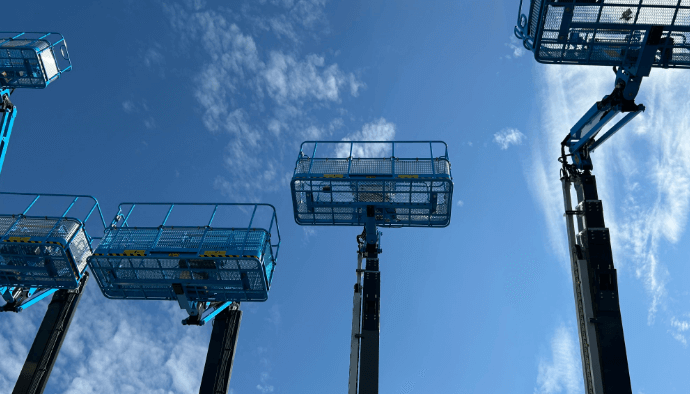
The circular economy is about keeping resources in use for as long as possible, extracting maximum value and minimising waste. Mobile Elevating Work Platforms (MEWPs) illustrate this approach:
- durability and lifecycle design — machines are built to last, with modular components that allow for efficient servicing and refurbishment
- cleaner power options — electrification and hybrid systems reduce emissions and noise, meeting the rising demand for sustainable solutions on urban and indoor sites
- refurbishment and repurposing — MAWPs can be recertified, extending their useful life and delivering stronger returns for fleet owners.
Exit strategies: closing the loop
A critical but sometimes overlooked element of the circular model is the exit strategy for equipment that no longer fits a fleet’s profile. This does not mean the end of a machine’s value — in fact, it often signals the start of a second productive life.
- Australia is well positioned to move used MAWPs into emerging markets across the Asia- Pacific region, where demand for safe, reliable, cost-effective equipment remains high.
- Smaller fleet owners benefit from structured pathways to acquire well-maintained used machines, gaining access to quality assets at lower upfront costs.
By building clear exit strategies, fleet owners keep their age profile under control, recover asset value, and contribute to a truly global circular economy.
Why fleet age matters
Fleet age is more than a matter of compliance or image — it directly affects utilisation, safety and profitability.
- For larger rental businesses, a younger fleet typically means higher utilisation, fewer breakdowns, and stronger alignment with customer expectations for modern, efficient equipment.
- For smaller operators, strategic renewal supported by refurbishment and secondary market access enables them to compete effectively without stretching capital too thin.
The most effective strategies treat lifecycle planning as integral to fleet management — from acquisition, through operation, to timely exit and repurposing.
Building a sustainable future
Circular economy principles are no longer optional in hire; they are a business-critical strategy.
The benefits are clear:
- reduced whole-of-life costs
- stronger pathways for resale and repurposing
- enhanced competitiveness through sustainable practices
- balanced fleet profiles that deliver both efficiency and reliability.
By embedding these practices, the industry can continue to lead the way in sustainability while reinforcing its core strength — making equipment work harder, last longer, and deliver value well beyond its first life.